
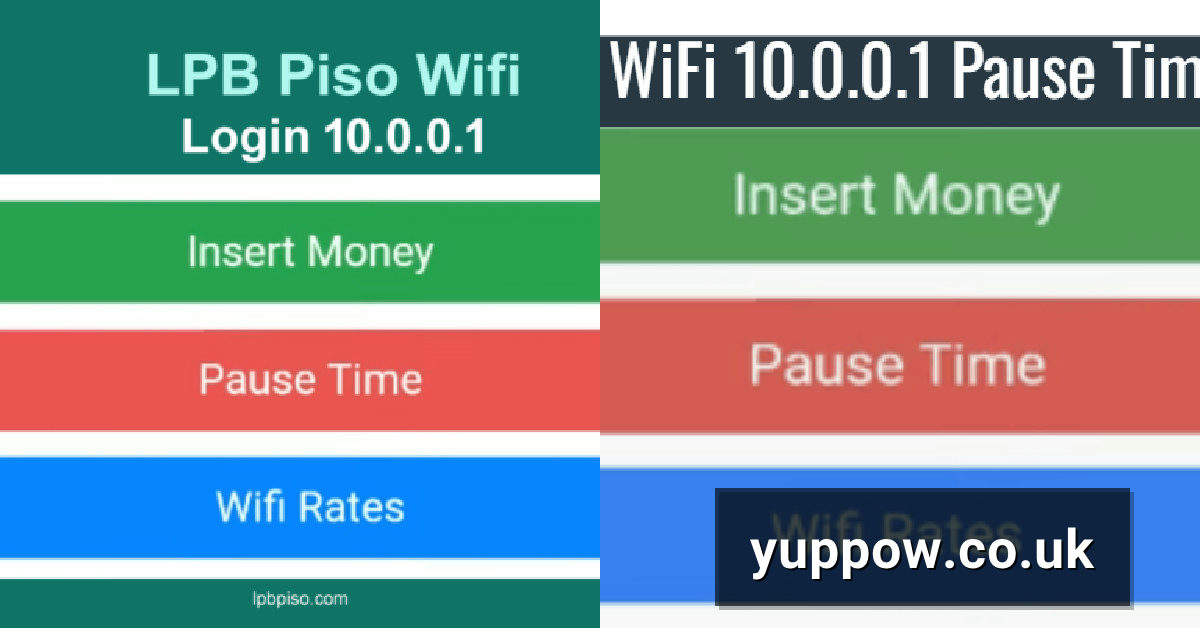
Walk into any sari-sari store in the Philippines and you might see a small white box with a coin slot. That is an LPB Piso WiFi unit, and its default gateway is 10.0.0.1. For store owners, this IP address is the key to managing their internet vending business. But many find the login process confusing.
How LPB Piso WiFi Became a Staple in Philippine Communities
LPB Piso WiFi is not just a router. It is a coin-operated internet service that lets people pay for a few minutes of connectivity. The system was developed by LPB Technologies, a Filipino tech company. According to the company’s public materials, the goal was to provide affordable internet access in areas where monthly subscriptions are too expensive. Sari-sari stores, barbershops, and even some public markets now host these units. Users insert coins or use mobile payment like GCash to get a voucher code. The router then grants time-limited access. This model has made internet available to students, workers, and families who cannot afford a regular plan. The 10.0.0.1 address is the gateway to configure all of this. Store owners use it to set prices, time limits, and monitor usage. Without access to that admin panel, the machine runs on default settings. That can lead to lost revenue or security issues. The cultural impact is real: LPB Piso WiFi has become a symbol of grassroots digital inclusion in the Philippines.
What LPB Technologies Says About the 10.0.0.1 Admin Panel
LPB Technologies has published official documentation about the 10.0.0.1 login process. According to their support pages, the default username and password are both “admin” (all lowercase). The company warns that these credentials should be changed immediately after first login. A representative from LPB Technologies stated in a 2023 forum post that the admin panel runs on a custom firmware based on OpenWrt. This firmware allows granular control over bandwidth, session time, and payment methods. The company also noted that the 10.0.0.1 address is a private IPv4 address, meaning it only works within the local network. You cannot access it from outside the store. Some users have reported that the login page does not load. LPB Technologies attributes this to browser cache issues or incorrect IP entry. They recommend typing “” directly into the address bar, not the search box. Another common issue is forgetting the admin password. The company provides a hardware reset method: press and hold the reset button on the back of the unit for 10 seconds. This restores factory defaults, including the IP and credentials. However, it also wipes all custom settings. Store owners should back up their configuration before resetting.
How LPB Piso WiFi Compares to Other Prepaid Internet Systems
LPB Piso WiFi is not the only coin-operated internet system. Competitors include PisoNet, WiFi City, and other local brands. The key difference is the backend. LPB uses a proprietary firmware that integrates with GCash and coin acceptors. PisoNet, for example, often relies on a separate billing server. LPB’s 10.0.0.1 admin panel is more self-contained. You do not need an external server to manage users. Another difference is the hardware. LPB units typically use a single-board computer with a built-in coin slot. Competitors sometimes use a standard router with an add-on coin acceptor. This makes LPB easier to set up but harder to repair if the hardware fails. In terms of security, LPB’s firmware receives updates. The company released a firmware update in 2024 that patched a vulnerability in the admin login page. That update also added a dark mode interface. Users on forums have praised the new UI for being more responsive on mobile phones. However, some complain that the update broke compatibility with older coin acceptors. LPB Technologies has not publicly commented on that issue. Overall, LPB Piso WiFi offers a more integrated experience, but it is less flexible than modular systems.
| Feature | LPB Piso WiFi | Typical Competitor |
|---|---|---|
| Default Gateway | 10.0.0.1 | 192.168.1.1 or 10.0.0.1 |
| Firmware | Custom OpenWrt-based | Often stock or third-party |
| Payment Integration | Coins + GCash | Coins only or external server |
| Admin Panel Access | Local only via 10.0.0.1 | Local or cloud-based |
| 2024 Security Update | Yes | Varies by brand |
The Origin Story: How LPB Technologies Built the Piso WiFi System
LPB Technologies was founded in the Philippines around 2015, according to business registration records. The company’s first product was a simple coin-operated timer for internet cafes. That evolved into the LPB Piso WiFi system. The 10.0.0.1 IP address was chosen because it is part of the private range and less likely to conflict with other home networks. Early units used a basic web interface. Store owners could set the price per minute and view a log of sessions. The system gained traction in 2017 when mobile data was still expensive in the Philippines. By 2019, LPB had released a second-generation unit with a color screen and GCash integration. The admin panel was redesigned to include graphs and real-time data. The company also launched a mobile app for remote monitoring, though it still requires the 10.0.0.1 gateway for initial setup. In 2021, LPB faced a controversy when some units were found to have a default password that could not be changed. The company issued a firmware update to fix that. Today, LPB Piso WiFi is used in thousands of locations across the Philippines and has been exported to other Southeast Asian countries. The company continues to update the firmware, with the latest version released in early 2024. 10.0.0.1 Piso Wifi: How to Login to Router Admin (2026 Updated Guide) keeps a longer factual record of the subject for those who want more
Frequently Asked Questions
Who is the manufacturer of LPB Piso WiFi routers?
LPB Piso WiFi routers are manufactured by LPB Technologies, a Filipino technology company based in the Philippines. The company designs both the hardware and the custom firmware that runs on the devices.
What is a good alternative to LPB Piso WiFi for prepaid internet?
A good alternative is PisoNet, which offers similar coin-operated WiFi but often uses a separate billing server. Another option is WiFi City, which provides cloud-based management. Each has different hardware and pricing models.
How does LPB Piso WiFi differ from a standard home router?
LPB Piso WiFi is designed for coin-operated public use, with a built-in coin acceptor and time-based billing. A standard home router lacks these features and cannot manage prepaid sessions without additional software.
When did LPB Technologies release the first Piso WiFi unit?
LPB Technologies released the first Piso WiFi unit around 2015, according to business records. The system evolved from an earlier coin-operated timer product for internet cafes.
How much does an LPB Piso WiFi unit cost?
The cost of an LPB Piso WiFi unit varies by model and retailer. Prices typically range from a few thousand to over ten thousand Philippine pesos, depending on features like screen size and payment options.
Common Login Issues and How to Resolve Them
Many store owners encounter problems when trying to access the 10.0.0.1 admin panel. The most frequent issue is the login page not loading. This often happens because the device is not connected to the LPB router’s network. Users must ensure their phone or laptop is connected to the LPB WiFi signal, not their home network. Another common problem is typing the IP address incorrectly. Some users type “10.0.0.1” into a search engine instead of the browser’s address bar. The correct method is to enter “” directly. Browser cache can also cause issues. Clearing the cache or using an incognito window often resolves the problem. If the login page still does not appear, the router may have a different IP address. Some LPB units use 192.168.1.1 or 10.0.0.2. For forgotten passwords, the hardware reset method is the only option. Pressing the reset button for 10 seconds restores factory defaults. After reset, the default username and password are both “admin”. Store owners should immediately change these to prevent unauthorized access.
Security Best Practices for LPB Piso WiFi Admin Panel
Securing the 10.0.0.1 admin panel is crucial for preventing revenue loss and data breaches. The first step is changing the default username and password. LPB Technologies recommends using a strong password with at least eight characters, including numbers and symbols. Store owners should also disable remote access if they do not need it. The admin panel is only accessible from the local network, but some firmware versions allow WAN access. Turning that off reduces risk. Another best practice is updating the firmware regularly. LPB releases updates that patch security vulnerabilities. The 2024 update, for example, fixed a cross-site scripting flaw. Store owners can check for updates in the admin panel under System Tools. Logging out after each session is also important. Leaving the admin panel open on a shared computer can allow others to change settings. Finally, store owners should monitor the session log for unusual activity. If they see unknown devices or unexpected changes, they should change the password immediately. These steps help keep the LPB Piso WiFi system secure and profitable.
How to Optimize LPB Piso WiFi Settings for Better Performance
Store owners can improve their LPB Piso WiFi service by adjusting a few settings in the 10.0.0.1 admin panel. Bandwidth management is one of the most important features. The admin panel allows setting a maximum speed per user. This prevents one customer from consuming all the bandwidth. A common recommendation is to limit each session to 1-2 Mbps for browsing and social media. For video streaming, a higher limit may be needed. Another useful setting is the session timeout. By default, unused sessions may remain active. Setting a shorter timeout, such as 5 minutes of inactivity, frees up slots for paying customers. The admin panel also supports MAC address filtering. This can block unauthorized devices from connecting. Some store owners use this to restrict access to specific devices. However, MAC addresses can be spoofed, so this is not a foolproof security measure. Regularly checking the system log helps identify issues like failed login attempts or hardware errors. LPB Technologies provides a user guide within the admin panel that explains each setting in detail.
What to Do If You Forget the LPB Piso WiFi Admin Password
Forgetting the admin password for the 10.0.0.1 panel is a common problem. The only official recovery method is a hardware reset. Locate the reset button on the back of the LPB unit. It is usually a small pinhole. Use a paperclip or similar object to press and hold the button for about 10 seconds. The unit will reboot and restore factory defaults. This means the IP address returns to 10.0.0.1, and the username and password become “admin” again. However, all custom settings, including price plans and voucher codes, are erased. Store owners should keep a backup of their configuration. Some firmware versions allow exporting settings to a file before resetting. If the unit was configured by a technician, contact them for the password. LPB Technologies does not provide backdoor access. After resetting, change the password immediately and reconfigure the settings. It is also a good idea to write down the new password and store it in a secure place.