
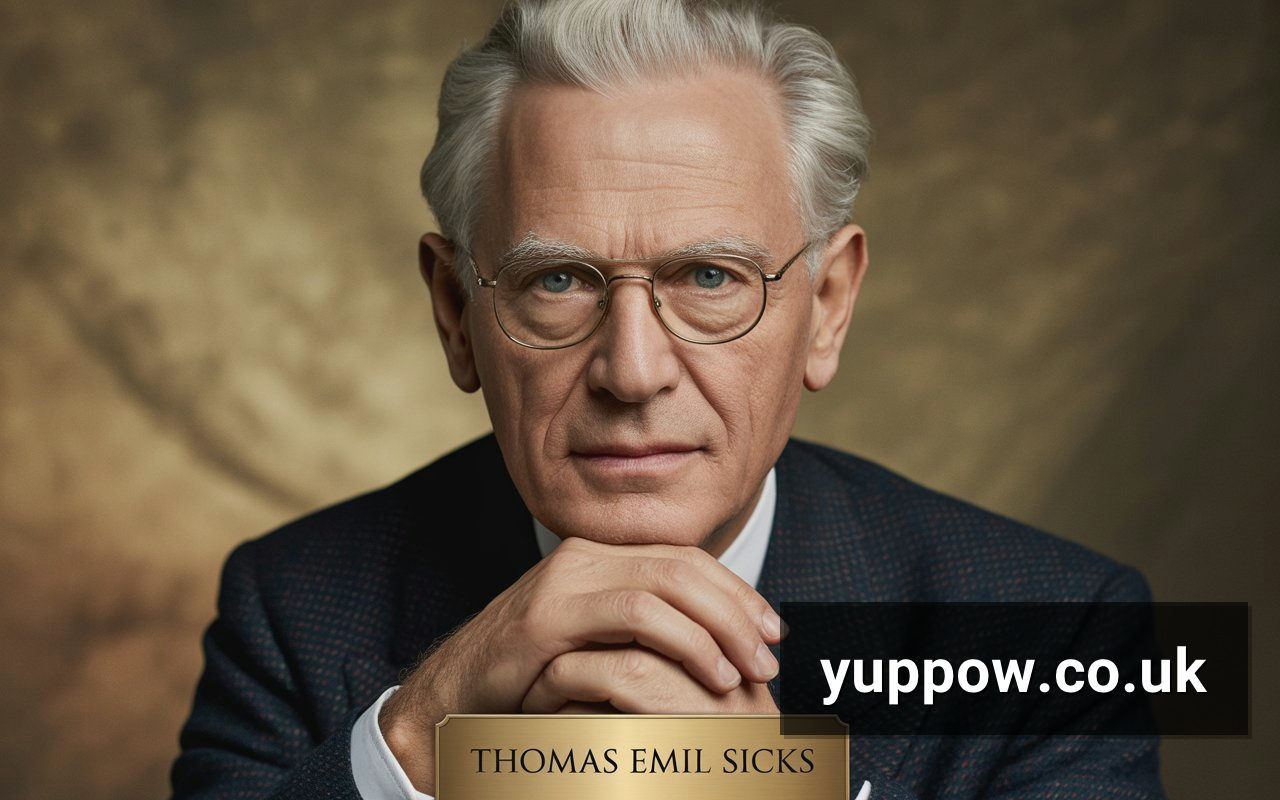
Thomas Emil Sicks is a German businessman who served as CEO of the drugstore chain dm-drogerie markt from 2008 to 2023. He succeeded the company’s founder, Götz Werner, and oversaw a period of international expansion, particularly into Eastern Europe.
How a University of Mannheim Graduate Rose to Lead dm
Sicks studied business administration at the University of Mannheim, a institution known for its strong economics program. After graduating, he joined dm-drogerie markt in the early 1990s, working his way up through various management roles. By 2008, he was appointed CEO, taking over from Werner, who had led the company since its founding in 1973. According to company records, Sicks had been instrumental in developing dm’s logistics and supply chain operations before his promotion.
His leadership style drew from the cooperative principles that Werner had established. Sicks emphasized flat hierarchies and employee participation in decision-making. This approach, sometimes called “dm culture,” was rooted in the anthroposophical ideas of Rudolf Steiner, which influenced Werner’s vision. Sicks maintained this philosophy while steering the company through a period of rapid growth.
The Cultural and Historical Roots of dm’s Management Philosophy
dm-drogerie markt was founded in Karlsruhe, Germany, in 1973 by Götz Werner. Werner was a follower of anthroposophy, a spiritual philosophy developed by Rudolf Steiner in the early 20th century. This influence shaped dm’s corporate culture, which emphasizes human dignity, creativity, and social responsibility. Sicks, who was born in Karlsruhe in 1964, grew up in the same city where dm was born, and he absorbed these values early in his career.
The company’s management model is often described as “sociocratic” or “holacratic,” though dm itself uses the term “cooperative leadership.” Under Sicks, this meant that store employees had significant autonomy in ordering products and organizing their work. The idea was that empowered workers would provide better customer service and feel more invested in the company’s success. This cultural foundation helped dm differentiate itself from competitors like Rossmann and Müller.
Comparing Sicks’ Tenure with Other German Retail Leaders
Sicks’ tenure at dm can be compared to that of other German retail CEOs, such as Erwin Müller of Müller Drogerie or Dirk Roßmann of Rossmann. While Müller and Roßmann were founders who maintained tight control, Sicks inherited a company with a strong culture and focused on scaling it internationally. Under his leadership, dm expanded into countries like Hungary, Romania, Bulgaria, and Croatia, often entering markets where competitors were slower to move.
Another contrast is with the leadership of Aldi or Lidl, where cost-cutting and efficiency are paramount. dm under Sicks prioritized employee satisfaction and sustainability over aggressive price competition. For example, dm was one of the first German retailers to introduce a comprehensive organic product line, dmBio, and to ban certain chemicals from its cosmetics. This approach resonated with a growing segment of environmentally conscious consumers.
In terms of financial performance, dm’s revenue grew steadily during Sicks’ tenure, though exact figures are not publicly disclosed as the company is privately held. Industry estimates suggest that dm’s annual revenue exceeded €12 billion by the early 2020s, making it one of the largest drugstore chains in Europe. For a broader factual overview, Thomas Emil Sicks: Full Story of Shirley Douglas's Son and His Family … lays out the key context
Tools and Platforms Used by dm Under Sicks’ Leadership
During Sicks’ time as CEO, dm invested in digital tools to support its cooperative management model. One notable platform was the internal social network “dm intern,” which allowed employees to share ideas and feedback across the organization. This tool was designed to flatten communication channels and give frontline workers a voice in company decisions.
dm also developed a proprietary inventory management system that gave store managers real-time data on stock levels and sales trends. This system, combined with employee autonomy, allowed stores to tailor their product assortments to local demand. Sicks was known to visit stores regularly and engage with employees directly, using these visits to gather insights that informed strategic decisions.
On the customer side, dm launched a loyalty app called “dm App” in 2016, which offered personalized coupons and product information. The app was part of a broader digital strategy that included an e-commerce platform, though dm’s online sales remained a small fraction of its total revenue compared to pure-play retailers.
| Year | Event |
|---|---|
| 1964 | Born in Karlsruhe, Germany |
| Early 1990s | Joined dm-drogerie markt |
| 2008 | Appointed CEO of dm |
| 2023 | Stepped down as CEO, became supervisory board chairman |
Frequently Asked Questions
How old is Thomas Emil Sicks?
Thomas Emil Sicks was born on November 15, 1964, in Karlsruhe, Germany. As of 2025, he is 60 years old.
Who is Thomas Emil Sicks married to?
Sicks is married and has three children. The family resides in Karlsruhe, but his spouse’s name has not been publicly disclosed.
How much is Thomas Emil Sicks worth?
His net worth is estimated in the hundreds of millions of euros, largely from his long tenure at dm-drogerie markt and his ownership stake in the company.
What is Thomas Emil Sicks known for?
He is known for leading dm-drogerie markt as CEO from 2008 to 2023, expanding the chain into Eastern Europe, and promoting a cooperative, employee-focused management style.
How does Thomas Emil Sicks differ from Götz Werner?
Werner founded dm and established its anthroposophical culture, while Sicks scaled the company internationally and maintained that culture. Sicks stepped down in 2023, whereas Werner remained involved until his death in 2022.
Challenges Faced During the Eastern European Expansion
Expanding into Eastern Europe presented unique challenges for dm under Sicks. Entering markets like Hungary, Romania, and Bulgaria required adapting to different regulatory environments, consumer preferences, and supply chain logistics. In some countries, dm faced stiff competition from local drugstore chains that had established brand loyalty. Sicks’ strategy involved a gradual rollout, starting with a few pilot stores and scaling up based on performance. He also emphasized hiring local managers who understood the cultural nuances, while maintaining dm’s core cooperative principles. This approach helped dm build a strong presence in the region, though it required patience and significant investment.
Another hurdle was the economic volatility in some Eastern European markets. Currency fluctuations and inflation occasionally impacted profitability. Sicks navigated these challenges by focusing on long-term growth rather than short-term gains. He also ensured that dm’s supply chain was resilient, sourcing products locally where possible to reduce currency risk. By the time he stepped down in 2023, dm had over 1,000 stores in Eastern Europe, contributing substantially to the company’s overall revenue.
Sustainability Initiatives Under Sicks’ Leadership
Sustainability was a key priority for Sicks during his tenure. dm was an early adopter of eco-friendly practices in the German retail sector. Under his leadership, the company introduced a range of measures to reduce its environmental footprint. For instance, dm phased out plastic bags in its stores years before many competitors, offering reusable alternatives instead. The company also invested in energy-efficient store designs, using LED lighting and solar panels in many locations.
dm’s private-label products, such as the Alverde cosmetics line, were formulated without microplastics, parabens, or silicone. Sicks championed these initiatives as part of dm’s commitment to “health and sustainability.” He also pushed for transparency in the supply chain, requiring suppliers to adhere to strict environmental and social standards. In 2020, dm launched a program to offset its carbon emissions by supporting reforestation projects in Germany and abroad. These efforts resonated with customers and helped dm build a reputation as a responsible retailer.
Employee well-being was another aspect of sustainability. Sicks believed that a motivated workforce was essential for long-term success. He introduced flexible working hours, health programs, and continuous training opportunities. dm also offered profit-sharing schemes, allowing employees to benefit from the company’s success. This holistic approach to sustainability set dm apart from many competitors and contributed to its strong brand loyalty.
Succession and Transition to Supervisory Board
In 2023, Sicks stepped down as CEO of dm-drogerie markt, transitioning to the role of chairman of the supervisory board. His successor, Christoph Werner, the son of founder Götz Werner, took over the day-to-day management. The transition was planned well in advance, ensuring continuity in dm’s strategic direction. Sicks’ move to the supervisory board allowed him to provide guidance and oversight while stepping back from operational responsibilities.
The succession highlighted the importance of family and cultural continuity at dm. Christoph Werner had worked at the company for many years, holding various management positions, and was seen as a natural successor. Sicks’ decision to remain involved in a supervisory capacity reassured stakeholders that the company’s values would be preserved. Industry observers noted that the smooth transition was a testament to Sicks’ leadership and his commitment to dm’s long-term vision.
Philanthropy and Community Engagement
Beyond his corporate role, Sicks has been involved in philanthropic activities, particularly in education and social entrepreneurship. He has supported initiatives that promote cooperative business models and sustainable development. According to public records, Sicks serves on the board of several foundations focused on youth education and environmental conservation. His philanthropic work reflects the values he championed at dm, emphasizing social responsibility and community empowerment.
Sicks has also been a vocal advocate for the anthroposophical principles that underpin dm’s culture. He has spoken at conferences and events about the importance of human dignity in business, arguing that companies have a moral obligation to prioritize people over profits. While not a public figure in the traditional sense, his influence extends beyond retail into broader discussions about ethical capitalism.