
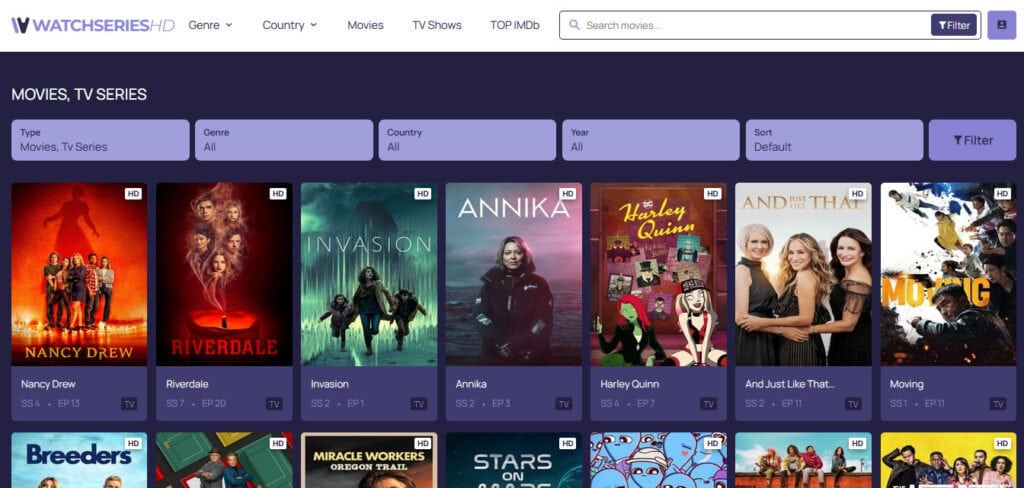
Many assume that WatchSeries online is just another streaming site like Netflix or Hulu. In reality, it functions as a directory of links to third-party hosts, not a content creator. Launched in the late 2000s, it became a go-to for unauthorized TV shows and movies, but its legal standing has always been precarious.
How WatchSeries Differs from Legal Streaming Services and Other Pirate Sites
WatchSeries online operates on a fundamentally different model than legitimate platforms. Services like Netflix, Amazon Prime, and Hulu license content directly from studios and pay royalties. WatchSeries, by contrast, indexes links to videos hosted on third-party servers. It does not store any files itself, a distinction that has been central to its legal defense but has not shielded it from enforcement actions. Background on watchseries online is documented in The 23 Best WatchSeries Alternatives in 2026 – PrivacySavvy
Compared to other pirate sites, WatchSeries shares similarities with Putlocker and 123Movies. All three aggregate links from external hosts. However, WatchSeries originally focused on TV series, while Putlocker and 123Movies emphasized movies. Over time, the lines blurred as each site expanded its catalog. Another key difference is domain strategy: WatchSeries has changed domains frequently, while some competitors have remained on the same domain for longer periods.
The user experience also varies. WatchSeries online typically features a simple interface with episode lists and direct links. In contrast, some pirate sites use more complex navigation or require registration. WatchSeries has historically relied on ad revenue from pop-ups and banners, a common trait among unauthorized streaming directories.
Legally, all these sites operate in a gray area. Copyright holders argue that linking to infringing content constitutes secondary infringement. Courts in several countries have agreed, leading to domain seizures and ISP blocks. WatchSeries has faced particular scrutiny from the Motion Picture Association (MPA), which has targeted it for takedowns.
One notable difference is the community aspect. WatchSeries online once had forums where users could request episodes or discuss shows. This feature set it apart from more anonymous aggregators. However, after domain seizures, the community aspect diminished as mirrors proliferated without consistent moderation.
In summary, while WatchSeries may appear similar to legal streaming services, its business model and legal exposure are entirely different. Understanding these distinctions is crucial for anyone considering using such platforms.
The Real-World Impact of WatchSeries on Viewers and the Entertainment Industry
WatchSeries online has had a measurable impact on both audiences and content creators. For viewers, the primary appeal is cost: free access to a vast library of TV shows and movies. This has made it particularly popular among younger demographics and in regions where legal streaming options are limited or expensive.
However, the user experience comes with risks. WatchSeries is notorious for intrusive advertising, including pop-ups that may lead to malware or phishing sites. According to some reports, users have encountered fake virus warnings and unwanted software installations. The site generates revenue through these ads, which are often served by networks that do not vet their clients.
For the entertainment industry, the impact is financial. Piracy reduces revenue from legitimate sales and streaming subscriptions. The MPA has estimated that online piracy costs the U.S. economy billions annually, though exact figures are disputed. WatchSeries online, as one of the more prominent pirate sites, has been a target of these concerns.
Beyond economics, piracy affects content distribution strategies. Studios may delay releases in certain markets or impose stricter digital rights management (DRM) to combat unauthorized sharing. Some argue that piracy also drives demand for legal services by exposing viewers to content they might not otherwise discover, but this claim remains contentious.
Cultural relevance is another dimension. WatchSeries has been referenced in media discussions about the changing landscape of television consumption. It represents a shift from appointment viewing to on-demand, ad-free access—a trend that legal services have since embraced. The site’s persistence despite enforcement highlights the challenges of policing digital content.
In regions with heavy internet censorship, WatchSeries online can also serve as a workaround for accessing blocked content. This has led to debates about whether such sites promote freedom of information or undermine intellectual property rights. The answer often depends on local laws and cultural attitudes toward copyright.
Ultimately, the real-world impact of WatchSeries is multifaceted. It offers convenience and cost savings to users but at the expense of legal and security risks. For the industry, it represents an ongoing battle to protect revenue streams in an increasingly digital world.
Current Status of WatchSeries: Recent Developments and What Comes Next
As of 2023, WatchSeries online remains accessible through numerous mirror sites, despite ongoing enforcement efforts. The original domain, watchseries.to, was seized by U.S. authorities in 2016 as part of Operation In Our Sites. Since then, the site has migrated through various domains, including watchseries.ac, watchseries.cr, and watchseries.lt.
Major ISPs in countries like the United Kingdom, Australia, and India have been ordered to block access to WatchSeries domains. However, users can bypass these blocks using VPNs or proxies. The cat-and-mouse game between site operators and authorities continues, with new mirrors appearing shortly after old ones are taken down.
Recent developments include increased cooperation between international law enforcement agencies. In 2022, Europol coordinated actions against several pirate streaming networks, though WatchSeries was not specifically named. The MPA continues to submit takedown notices to search engines and hosting providers, but the decentralized nature of the site makes complete eradication difficult.
What comes next for WatchSeries online? Several scenarios are possible. One is that the site will continue to operate in its current form, relying on domain hopping and user awareness. Another is that legal pressure will force it to shut down permanently, though history suggests that successors will emerge. Some analysts predict a shift toward decentralized platforms like peer-to-peer streaming or blockchain-based services, which are harder to police.
Technological advancements also play a role. Streaming quality on pirate sites has improved, with some mirrors offering HD and even 4K content. This raises the bar for legal services, which must compete on both price and quality. At the same time, anti-piracy technology like automated content recognition (ACR) is becoming more sophisticated, potentially making it harder for sites like WatchSeries to operate undetected.
For users, the future likely involves continued access but with increasing friction. ISPs may implement more aggressive blocking, and legal consequences for accessing pirate sites could become more severe in some jurisdictions. However, the demand for free content ensures that alternatives will persist.
In summary, WatchSeries online is not going away quietly. Its resilience demonstrates the challenges of enforcing copyright in the digital age. The next few years will likely see further legal battles and technological adaptations on both sides.
Common Misconceptions About WatchSeries Clarified with Facts
Several misconceptions surround WatchSeries online. One common belief is that it is illegal to watch content on the site. In reality, the legality depends on jurisdiction. In many countries, streaming unauthorized content is a civil infringement, not a criminal offense, though downloading may carry heavier penalties. However, the act of linking to infringing content is often considered illegal, which is why site operators face prosecution.
Another misconception is that WatchSeries hosts the videos itself. As noted, it only indexes links to third-party hosts. This distinction has been used in legal defenses, but courts have generally ruled that facilitating access to infringing content is itself unlawful. The site’s operators have been sued for contributory copyright infringement.
Some users believe that using a VPN makes accessing WatchSeries online completely safe. While a VPN can hide your IP address and bypass geo-blocks, it does not make the activity legal. Moreover, free VPNs may log user data or contain malware. Even paid VPNs are not immune to legal requests for user information.
There is also a misconception that WatchSeries is a single entity. In fact, after the original domain seizure, numerous unofficial mirrors appeared, some of which may be operated by different parties. These mirrors may have varying levels of security and reliability. Users cannot be sure they are accessing the original site.
Finally, some argue that using WatchSeries hurts only big corporations, not individual creators. This oversimplifies the issue. While major studios bear the brunt of financial losses, independent filmmakers and small production companies also suffer. Piracy can reduce royalties and undermine funding for future projects.
Understanding these misconceptions is important for making informed decisions. WatchSeries online operates in a legal gray area, but the risks—both legal and security-related—are real. Users should weigh these factors before accessing the site.
Frequently Asked Questions
What is WatchSeries online?
WatchSeries online is a website that indexes links to free streaming content, primarily TV shows and movies. It does not host files itself but directs users to third-party video hosts. The site gained popularity in the late 2000s and has faced repeated legal challenges.
How many domains has WatchSeries used since its launch?
WatchSeries has used dozens of domains since its inception. The original watchseries.to was seized in 2016. Subsequent domains include watchseries.ac, watchseries.cr, and watchseries.lt, among others. The exact number is difficult to track due to the proliferation of mirrors.
Where is WatchSeries currently accessible?
WatchSeries is accessible through various mirror sites, though many are blocked by ISPs in countries like the UK, Australia, and India. Users often rely on VPNs or proxies to access the site. The current primary domain changes frequently to evade enforcement.
Is it true that WatchSeries was shut down by the U.S. government?
Yes, the original WatchSeries domain was seized by U.S. Immigration and Customs Enforcement (ICE) in 2016 as part of a crackdown on pirate sites. However, the site quickly reappeared on new domains. The seizure did not eliminate the service, only the original domain.
How does WatchSeries differ from legal streaming services like Netflix?
WatchSeries does not license content or pay royalties. It aggregates links to unauthorized copies, while Netflix and similar services have legal agreements with studios. WatchSeries also relies on advertising revenue from intrusive ads, whereas legal services use subscription or ad-supported models with proper security measures.
Security Risks and Privacy Concerns When Using WatchSeries
Using WatchSeries online exposes users to significant security risks. The site relies heavily on third-party advertising networks that often serve malicious ads. These ads can lead to drive-by downloads, where malware installs without user interaction. Some users have reported ransomware infections after visiting WatchSeries mirrors.
Privacy is another major concern. WatchSeries does not require registration, but third-party trackers embedded in the site can collect browsing data. These trackers may include cookies, fingerprinting scripts, and analytics tools. In some cases, the site has been observed serving ads that attempt to trick users into revealing personal information.
Law enforcement monitoring is also a risk. While individual users are rarely prosecuted for streaming, copyright holders have obtained court orders to identify IP addresses accessing pirate sites. In several countries, ISPs are required to log user activity and share it with authorities upon request. Using a VPN can mitigate this risk, but not eliminate it entirely.
Phishing attacks are common on WatchSeries mirrors. Fake login pages or survey scams may appear, asking for credentials or payment details. These are designed to steal sensitive information. Users should be wary of any pop-up that requests personal data or claims a prize.
Browser exploits are another vector. Some WatchSeries mirrors have been found to contain JavaScript code that exploits vulnerabilities in outdated browsers. This can allow attackers to take control of the user’s device. Keeping browsers and plugins updated is essential, but not foolproof.
Mobile users face additional risks. WatchSeries mirrors often redirect to mobile-specific ad pages that may request permissions to send notifications or access device features. Granting these permissions can lead to spam or data theft. Android users are particularly vulnerable due to the open nature of the platform.
In summary, the security and privacy risks associated with WatchSeries online are substantial. Users should consider these factors carefully and take precautions such as using ad blockers, VPNs, and up-to-date security software. Even with these measures, no guarantee of safety exists.
Alternatives to WatchSeries: Legal Options for Streaming TV Shows and Movies
For those seeking legal alternatives to WatchSeries online, several options exist. Free ad-supported streaming services like Tubi, Pluto TV, and Peacock offer extensive libraries without requiring a subscription. These platforms are legal and secure, with content licensed from studios.
Subscription services remain popular. Netflix, Hulu, Amazon Prime Video, and Disney+ provide vast catalogs with original content. While they require monthly fees, they offer high-quality streaming, no ads (on most tiers), and reliable security. Many also offer free trials for new users.
For budget-conscious viewers, library-based services like Kanopy and Hoopla are excellent options. These platforms partner with public libraries to offer free streaming to cardholders. They feature indie films, documentaries, and classic TV shows, all legally licensed.
Regional services cater to specific markets. For example, Hotstar in India, iQiyi in China, and BBC iPlayer in the UK provide localized content. These services often have lower subscription costs than global platforms and may offer free tiers with ads.
Rental and purchase options are also available. Services like Apple TV, Google Play, and Vudu allow users to rent or buy individual episodes or movies. This is ideal for those who want to watch specific content without committing to a subscription.
Finally, some networks offer free streaming on their own websites. ABC, NBC, and CBS have ad-supported players with recent episodes available for a limited time. These are legal and safe, though content is rotated regularly.
Choosing a legal alternative to WatchSeries online ensures a safer experience and supports content creators. While free options exist, they often come with ads or limited catalogs. For the best balance of cost and selection, a combination of free and subscription services is recommended.
How to Identify Safe WatchSeries Mirrors and Avoid Scams
Given the proliferation of WatchSeries online mirrors, distinguishing safe from malicious ones is critical. Legitimate mirrors typically have a clean interface with minimal pop-ups, though some ads are unavoidable. Scam mirrors often bombard users with aggressive pop-ups, redirect to unrelated pages, or display fake download buttons.
Checking domain age can help. Tools like WHOIS lookup reveal registration dates. Established mirrors that have been active for months or years are generally more reliable, though not guaranteed safe.
User reviews on forums like Reddit provide real-world experiences. Communities dedicated to streaming often share which mirrors are currently working and which contain malware. However, users should verify information from multiple sources, as some posts may be promotional.
Security software is essential. A good antivirus program with web protection can block malicious sites before they load. Browser extensions like uBlock Origin and NoScript further reduce risk by blocking scripts and ads. Combining these tools offers layered defense.
Finally, avoid mirrors that request personal information or require registration. WatchSeries online never needed an account to stream. Any mirror asking for email, credit card details, or login credentials is almost certainly a phishing attempt. Stick to mirrors that offer direct streaming without barriers.