
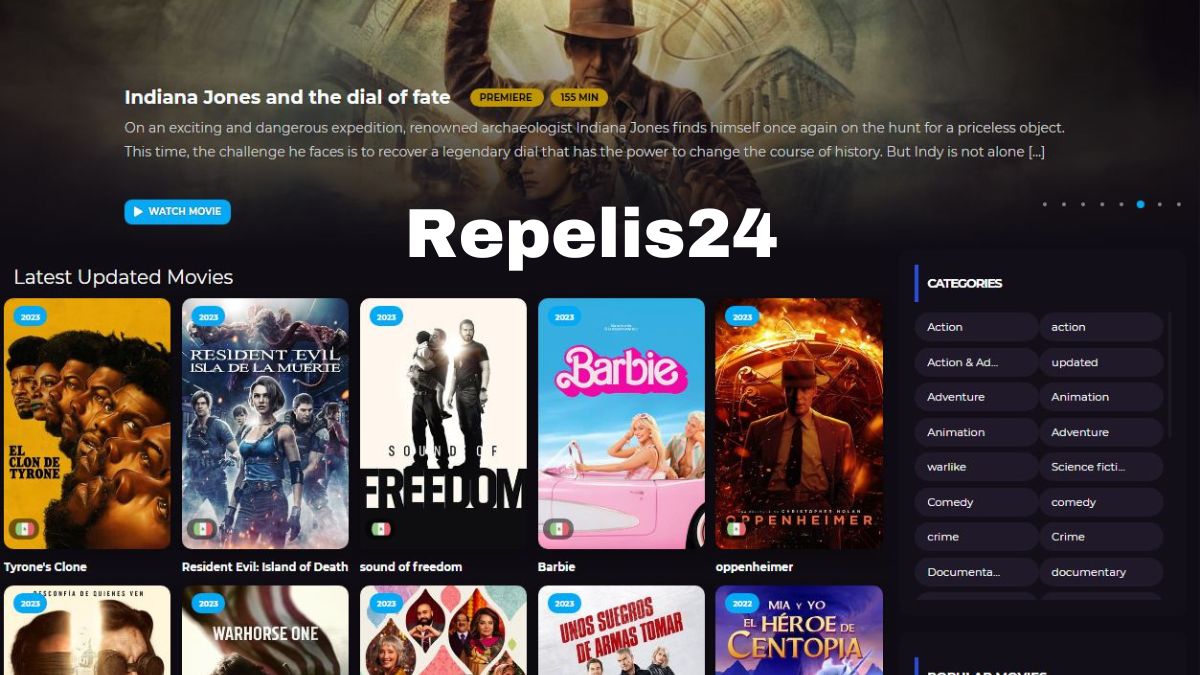
In 2021, the Motion Picture Association (MPA) officially listed Repelis24 as a notorious piracy market. The Spanish-language streaming site had become a go-to destination for millions seeking free access to movies and TV shows without authorization. This article explores how Repelis24 operated, how it compared to legal alternatives, the timeline of its enforcement troubles, and what misconceptions still surround it.
How Repelis24 Compared to Legal Streaming Platforms Like Netflix and Disney+
Repelis24 offered a vast library of dubbed and subtitled Latin American content, often uploading new releases within days of their theatrical debut. Legal platforms like Netflix and Disney+ typically require licensing agreements and regional availability, which can delay access in Latin America. Repelis24 bypassed these restrictions entirely, providing free streams without any payment or subscription. However, the user experience differed sharply. Legal services offer high-definition video, reliable playback, and customer support. Repelis24 relied on intrusive ads, pop-ups, and frequent redirects, often leading to malware risks. The site also changed domain names regularly to evade blocking, forcing users to search for new URLs. While Netflix invested billions in original content and local productions, Repelis24 simply repackaged stolen material. The MPA’s 2021 report highlighted that Repelis24 was part of a network of similar sites, including Repelis and Pelisplus, which collectively diverted significant revenue from legitimate distributors. According to some sources, the availability of free pirated content directly impacted subscription growth for legal services in the region. Yet, as enforcement increased, many users eventually migrated to paid platforms, contributing to the expansion of services like Disney+ in Latin America after 2020. A reference profile of the subject is maintained on RePelis24 | Ver Películas y Series Online Gratis HD
| Feature | Repelis24 | Legal Platforms (Netflix, Disney+) |
|---|---|---|
| Cost | Free | Subscription fee |
| Content library | Pirated, often new releases | Licensed, curated |
| Video quality | Variable, often low | HD/4K |
| Ads/malware risk | High | None |
| Legal status | Illegal | Legal |
Timeline of Key Moments in Repelis24’s Rise and Fall
Repelis24 emerged in the mid-2010s as part of a wave of Spanish-language pirate streaming sites. Its exact launch date is unclear, but by 2018 it had gained significant traction across Latin America. The site’s operators frequently changed domain names—from repelis24.com to repelis24.co and others—to stay ahead of blocking orders. In 2019, several Latin American countries, including Argentina and Mexico, began court-ordered ISP blocks targeting the site. The MPA’s 2021 Notorious Markets report specifically named Repelis24, citing its large library and persistent evasion tactics. That same year, domain seizures by U.S. Immigration and Customs Enforcement (ICE) and international partners disrupted access temporarily. However, the site often reappeared under new domains within days. By 2022, coordinated actions by the Alliance for Creativity and Entertainment (ACE) and local authorities led to more permanent shutdowns. Servers hosted in countries with lax copyright enforcement, such as Ukraine and the Netherlands, were taken offline. By early 2023, Repelis24 became largely inaccessible, with most domain names redirecting to seizure banners or returning errors. The site’s decline coincided with a broader drop in illegal streaming traffic in Latin America, according to some industry reports. Legal alternatives like Netflix, Amazon Prime Video, and Disney+ expanded their catalogs and improved regional pricing, offering a viable alternative for former pirate users.
Common Misconceptions About Repelis24 Clarified with Facts
One common misconception is that Repelis24 was a single, stable website. In reality, it was a shifting network of domains and mirror sites, often operated by the same group behind Repelis and Pelisplus. Another myth is that using Repelis24 was harmless because it only streamed content. In fact, the site’s ad infrastructure often delivered malware, and users risked legal exposure in countries with strict anti-piracy laws. Some believe that Repelis24 was shut down permanently after the 2021 MPA listing. However, the site continued to operate under new domains for another year before becoming largely inaccessible. Another misconception is that piracy sites like Repelis24 hurt only Hollywood studios. In truth, local Latin American filmmakers and distributors also suffered revenue losses when their content was pirated. Finally, some users think that free streaming sites are a victimless crime. But the reality is that piracy undermines the entire creative ecosystem, from writers to technicians. The MPA’s 2021 report noted that Repelis24 was among the most visited pirate sites in Spanish-speaking markets, with millions of monthly visits. Despite its popularity, the site offered no compensation to rights holders and operated entirely outside legal frameworks.
Behind the Scenes: How Repelis24 Operated and Evaded Enforcement
Repelis24’s operations relied on a decentralized infrastructure. The site did not host video files on its own servers. Instead, it embedded third-party video players from cyberlockers or streaming hosts, often located in jurisdictions with weak copyright laws. This made direct takedowns difficult. The site generated revenue through aggressive advertising networks, including pop-ups, fake download buttons, and even malicious ads that could install ransomware. They also used content delivery networks (CDNs) to distribute traffic and avoid detection. According to some sources, the site’s administrators communicated via encrypted messaging apps and accepted cryptocurrency payments for premium accounts that removed ads. The MPA and ACE collaborated with local internet service providers to block domains at the DNS level, but users could bypass blocks using VPNs or alternative DNS servers. The cat-and-mouse game continued until law enforcement targeted the hosting providers and payment processors. By 2023, most of the known servers were offline, and the site’s operators had moved on to other ventures. The shutdown of Repelis24 was a significant victory for anti-piracy efforts, but it also highlighted the challenges of policing the decentralized web.
Frequently Asked Questions
Is Repelis24 still accessible in 2024?
As of 2024, Repelis24 is largely inaccessible. Most of its known domains have been seized or are inactive. Some mirror sites may appear briefly, but they are often quickly shut down by authorities. Users attempting to access the site will likely encounter error messages or seizure notices.
How many users did Repelis24 have at its peak?
Exact user numbers are not publicly available, but the MPA’s 2021 report noted that Repelis24 was among the most visited pirate sites in Spanish-speaking markets, with millions of monthly visits. Traffic analytics from third-party services suggested it ranked highly in several Latin American countries.
How does Repelis24 differ from legal streaming services like Netflix?
Repelis24 offered free, unauthorized access to copyrighted content, while Netflix operates under licensing agreements and charges a subscription fee. Repelis24’s video quality was often lower, and it relied on intrusive ads and malware risks. Legal services provide reliable, high-quality streaming and support content creators.
Was Repelis24 operated by a known criminal organization?
However, its operators used sophisticated evasion tactics and likely profited significantly from ad revenue. The site was part of a network of similar pirate sites, but the identities of those behind it remain largely unknown.
Where were Repelis24’s servers located?
Repelis24’s servers were hosted in multiple countries with lax copyright enforcement, including Ukraine, the Netherlands, and Romania. This made legal action more complex, as authorities had to coordinate across jurisdictions. The use of offshore hosting was a deliberate strategy to avoid takedowns.
Legal Consequences for Users and Operators of Repelis24
Users of Repelis24 faced varying legal risks depending on their country of residence. In the United States, streaming pirated content is considered a civil infringement, but downloading or distributing can lead to criminal charges. In Latin American countries like Mexico and Argentina, anti-piracy laws have become stricter, with fines and potential jail time for repeat offenders. However, prosecutions of individual users have been rare. The operators of Repelis24, on the other hand, faced more severe consequences. Domain seizures by ICE and international law enforcement disrupted their operations, but the anonymous nature of the site made it difficult to identify and arrest the individuals behind it. Some sources suggest that the operators may have faced legal action in countries where servers were hosted, but no public records of convictions have emerged. The MPA and ACE have successfully sued similar pirate site operators in the past, leading to significant financial penalties and prison sentences. For Repelis24, the lack of a central figure meant that enforcement focused on shutting down the infrastructure rather than prosecuting individuals.
How Repelis24’s Shutdown Affected the Pirate Streaming Landscape
The decline of Repelis24 did not eliminate piracy in Spanish-speaking markets. Instead, users migrated to other sites like Pelisplus, Cuevana, and Gnula. Some of these sites adopted similar tactics, such as domain hopping and offshore hosting. However, the coordinated efforts by ACE and local authorities led to a gradual reduction in the availability of high-quality pirate streams. Legal streaming services capitalized on this shift by expanding their libraries and offering competitive pricing. For example, Netflix invested heavily in Spanish-language originals like La Casa de Papel and Narcos, which attracted former pirate users. Disney+ launched in Latin America in 2020 with a strong catalog of Marvel, Star Wars, and Disney classics. The closure of Repelis24 also prompted some users to explore alternative methods of accessing content, such as VPNs and torrent sites. However, the overall trend in the region has been toward increased adoption of legal streaming services. According to some industry reports, piracy rates in Latin America have declined steadily since 2021, partly due to the shutdown of major pirate sites like Repelis24.
Technical Analysis: How Repelis24’s Streaming Infrastructure Worked
Repelis24’s streaming infrastructure relied on a combination of third-party video hosts and custom scripts. When a user clicked on a movie or TV show, the site would fetch the video file from a remote server, often hosted on cyberlockers like Openload or Streamango. These hosts provided the actual video streaming, while Repelis24 acted as a directory and player interface. The site used JavaScript to embed the video player and manage ad injections. Pop-up ads were triggered by user interactions, such as clicking the play button or hovering over certain areas. The site also employed anti-adblock scripts that prevented users from blocking ads, ensuring a steady stream of revenue. To evade detection, Repelis24 frequently updated its list of video hosts and used randomized subdomains. The site’s backend was likely managed through a content management system (CMS) customized for pirate operations. Some security researchers have noted that the code contained obfuscated JavaScript to hide malicious functions. The infrastructure was designed to be resilient: if one video host was taken down, the site would automatically switch to another. This modular approach made it difficult for authorities to disrupt the service completely.
How Repelis24’s Shutdown Affected the Pirate Streaming Landscape
The decline of Repelis24 did not eliminate piracy in Spanish-speaking markets. Instead, users migrated to other sites like Pelisplus, Cuevana, and Gnula. Some of these sites adopted similar tactics, such as domain hopping and offshore hosting. However, the coordinated efforts by ACE and local authorities led to a gradual reduction in the availability of high-quality pirate streams. Legal streaming services capitalized on this shift by expanding their libraries and offering competitive pricing. For example, Netflix invested heavily in Spanish-language originals like La Casa de Papel and Narcos, which attracted former pirate users. Disney+ launched in Latin America in 2020 with a strong catalog of Marvel, Star Wars, and Disney classics. The closure of Repelis24 also prompted some users to explore alternative methods of accessing content, such as VPNs and torrent sites. However, the overall trend in the region has been toward increased adoption of legal streaming services. According to some industry reports, piracy rates in Latin America have declined steadily since 2021, partly due to the shutdown of major pirate sites like Repelis24.
Technical Analysis: How Repelis24’s Streaming Infrastructure Worked
Repelis24’s streaming infrastructure relied on a combination of third-party video hosts and custom scripts. When a user clicked on a movie or TV show, the site would fetch the video file from a remote server, often hosted on cyberlockers like Openload or Streamango. These hosts provided the actual video streaming, while Repelis24 acted as a directory and player interface. The site used JavaScript to embed the video player and manage ad injections. Pop-up ads were triggered by user interactions, such as clicking the play button or hovering over certain areas. The site also employed anti-adblock scripts that prevented users from blocking ads, ensuring a steady stream of revenue. To evade detection, Repelis24 frequently updated its list of video hosts and used randomized subdomains. The site’s backend was likely managed through a content management system (CMS) customized for pirate operations. Some security researchers have noted that the code contained obfuscated JavaScript to hide malicious functions. The infrastructure was designed to be resilient: if one video host was taken down, the site would automatically switch to another. This modular approach made it difficult for authorities to disrupt the service completely.
What Lessons the Repelis24 Case Offers for Anti-Piracy Efforts
The Repelis24 saga illustrates several key lessons for combating online piracy. First, domain hopping and offshore hosting remain effective evasion tactics that require international cooperation to counter. Second, targeting the advertising networks that fund pirate sites can be as impactful as shutting down the sites themselves. Third, providing affordable, accessible legal alternatives is crucial for reducing demand. The success of services like Netflix and Disney+ in Latin America shows that when legal options are convenient and reasonably priced, many users will abandon piracy. However, the cat-and-mouse game continues: as one site falls, others rise. Anti-piracy organizations like ACE have shifted their focus to disrupting the entire ecosystem, including payment processors and hosting providers. The Repelis24 case also highlights the importance of public education about the risks of malware and legal consequences. While enforcement actions have reduced the prevalence of major pirate sites, the underlying infrastructure remains adaptable. Future efforts may need to leverage AI and machine learning to detect and takedown new domains more quickly.
How Repelis24’s Legacy Influences Current Streaming Piracy Trends
Although Repelis24 is largely defunct, its legacy persists in the tactics used by newer pirate sites. Many current Spanish-language streaming sites employ similar domain-hopping strategies and rely on the same advertising networks. The site’s shutdown also accelerated the fragmentation of the pirate streaming landscape, with users dispersing across numerous smaller sites rather than congregating on a single platform. This fragmentation makes enforcement more challenging, as resources must be spread across many targets. On the positive side, the decline of Repelis24 contributed to a measurable drop in piracy traffic in Latin America, according to some industry data. Legal streaming services have reported increased subscriber growth in the region since 2021, partly attributed to the reduced availability of free pirated content. However, the threat of piracy remains significant, especially for new releases. The Repelis24 case serves as a reminder that sustained, coordinated action is necessary to protect intellectual property in the digital age. As technology evolves, so too will the methods of pirates, requiring constant vigilance and adaptation from rights holders and law enforcement.