
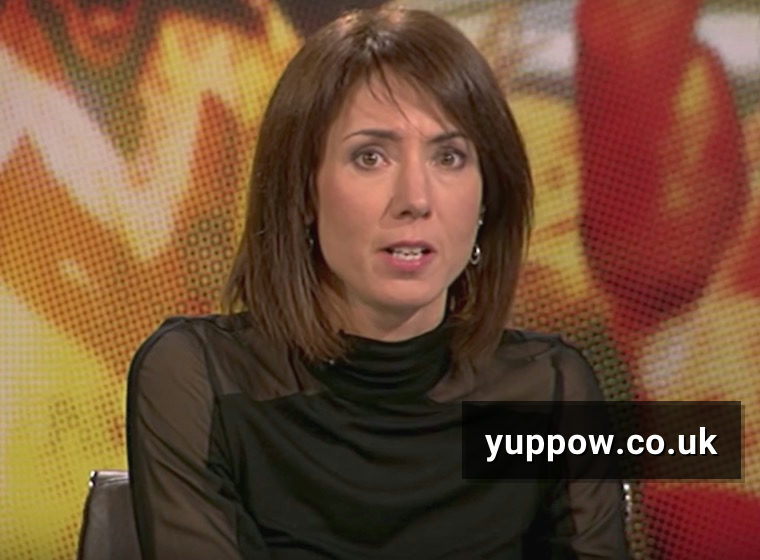
Many assume that a deep, authoritative voice in sports broadcasting belongs to a man. Tanya Arnold proves otherwise. The British voice-over artist has become the voice of BBC’s Match of the Day and other sports programs, known for her naturally deep, smoky tone.
How Tanya Arnold Built a Career Around Her Deep Voice
Arnold began her voice-over career in the 1990s after working in radio. Her deep voice, often described as “gravelly” or “smoky,” is the result of natural vocal cord thickness, not training. She did not set out to be a voice-over artist; radio work led her to commercial voice-overs.
Her big break came when she voiced commercials for brands like Guinness and Ford. These spots showcased her resonant tone, which stood out in a field dominated by male voices. By the 2010s, her voice gained wider recognition through sports broadcasting, particularly with the BBC.
Arnold’s deep voice is sometimes compared to that of actor Brian Blessed, known for his booming vocal delivery. The comparison highlights how rare a deep female voice is in media. Arnold has spoken about facing gender stereotypes because of her vocal pitch. Some listeners initially assumed she was a man when they heard her on the radio.
In 2023, she narrated the BBC documentary The Footballer’s Footballer, further cementing her role in sports media. She continues to work as a freelance voice artist based in the UK, taking on projects that range from corporate videos to television narration.
Comparing Tanya Arnold’s Voice to Other Deep-Voiced Female Artists
Arnold is not the only woman with a deep voice in media, but she is one of the few in sports broadcasting. Other notable deep-voiced women include actors like Kathleen Turner and singers like Cher. However, Arnold’s voice is distinct because of its authoritative, news-anchor quality.
In the UK, female voice-over artists with lower pitches are still uncommon. Arnold’s voice sits in a similar range to that of actor Brian Blessed, but with a smoother texture. The comparison underscores how unusual her vocal profile is for a woman.
Unlike some voice actors who train to lower their pitch, Arnold’s deep voice is entirely natural. This gives her delivery an authenticity that resonates with audiences. Her voice carries a sense of gravitas that suits sports commentary and documentary narration.
Arnold’s success has opened doors for other women with deep voices. She has become a reference point for discussions about vocal diversity in media. Her career demonstrates that a non-traditional voice can be an asset rather than a limitation.
Lessons from Tanya Arnold’s Experience with Gender Stereotypes
Arnold has spoken candidly about the challenges she faced due to her deep voice. Early in her career, some radio producers hesitated to put her on air because they thought listeners would find her voice confusing. One producer told her she sounded “too masculine” for a female presenter.
Rather than change her voice, Arnold persisted. She took on voice-over work that played to her strengths, such as commercials for products that required a commanding tone. Her deep voice became her trademark, not a liability.
The key lesson from Arnold’s experience is that authenticity can overcome bias. She did not try to raise her pitch or soften her delivery. Instead, she leaned into her natural sound and found a niche where it was valued.
Another lesson is the importance of representation. Arnold’s visibility has helped normalize deep female voices in media. Young women with similar vocal characteristics now have a role model who succeeded without conforming to expectations.
Arnold’s story also highlights the arbitrary nature of gender stereotypes. A deep voice is often associated with authority and credibility, yet women with deep voices have historically been discouraged from using them publicly. Arnold’s career challenges that double standard.
Behind the Scenes: How Tanya Arnold Prepares for Voice-Over Work
Arnold’s preparation process is straightforward. She does not warm up her voice with special exercises, as her deep voice is natural and consistent. She focuses on reading the script clearly and matching the tone required by the client.
For sports broadcasts like Match of the Day, she receives the script shortly before recording. She reads it through once to understand the flow, then records in one or two takes. Her efficiency comes from years of experience in radio and voice-over work.
Arnold records from a home studio, which is common for freelance voice artists. She uses professional-grade microphones and audio editing software to ensure clean sound. The setup allows her to work with clients around the world without traveling.
One challenge she faces is maintaining vocal health. A deep voice can be prone to strain if overused. Arnold avoids shouting and stays hydrated, but she does not follow a strict vocal regimen. She trusts her natural instrument.
Her behind-the-scenes approach is a reminder that voice-over work is not always glamorous. It requires discipline, reliability, and the ability to deliver consistent quality under tight deadlines. Arnold’s professionalism has made her a trusted voice for the BBC and other major brands.
| Aspect | Details |
|---|---|
| Career Start | 1990s, after radio work |
| Notable Clients | BBC, Guinness, Ford |
| Voice Description | Deep, smoky, gravelly, authoritative |
| Key Documentary | The Footballer’s Footballer (2023) |
| Vocal Origin | Natural vocal cord thickness, not training |
Frequently Asked Questions
What impact has Tanya Arnold had on sports broadcasting?
Arnold has become a recognizable voice in UK sports media, particularly through her work with BBC’s Match of the Day. Her deep voice challenges gender norms and has inspired other women with similar vocal characteristics to pursue voice-over careers.
How many years has Tanya Arnold been a voice-over artist?
Arnold began her voice-over career in the 1990s, meaning she has been active for over 25 years. She transitioned from radio to voice-over work and has since built a diverse portfolio spanning commercials, documentaries, and sports programs.
How much does it cost to hire Tanya Arnold for a voice-over project?
Arnold’s rates are not publicly disclosed, as they vary by project scope, usage rights, and duration. As an experienced freelance voice artist, her fees are likely competitive within the UK market. Interested clients typically request a quote through her professional website.
Is Tanya Arnold still working as a voice-over artist?
Yes, Arnold continues to work as a freelance voice artist based in the UK. She remains active in sports broadcasting and takes on new projects, including corporate videos and narration. Her 2023 documentary narration confirms her ongoing presence in the industry. A reference profile of the subject is maintained on Tanya Arnold: 7 interesting facts about the BBC sports presenter
Is it safe for women to have a naturally deep voice like Tanya Arnold’s?
Yes, a naturally deep voice is a normal variation in human vocal anatomy and poses no health risks. Arnold’s voice results from thicker vocal cords, which is a genetic trait. There is no medical concern associated with having a deep voice, though some individuals may face social stereotypes.
The Science Behind Tanya Arnold’s Deep Voice
Vocal pitch is determined by the length and thickness of the vocal cords. Thicker and longer cords vibrate at a lower frequency, producing a deeper sound. Arnold’s voice falls in a range typically associated with male speakers, but it is a natural female variation.
Hormones also play a role in vocal development. During puberty, testosterone causes the vocal cords to thicken in both males and females, though the effect is more pronounced in males. Some women retain a lower pitch due to genetic factors or hormonal influences.
Arnold has never undergone voice training to lower her pitch. Her voice is a product of biology, not technique. This sets her apart from some voice actors who intentionally deepen their voices for specific roles.
Voice experts note that deep-voiced women often have a higher proportion of fast-twitch muscle fibers in their vocal cords, allowing for both depth and flexibility. Arnold’s ability to modulate her tone for different contexts—from authoritative sports narration to warm commercial reads—demonstrates this versatility.
How Tanya Arnold’s Voice Compares to Other Female Sports Broadcasters
Female sports broadcasters in the UK and US typically have higher-pitched voices. Examples include Clare Balding, Gabby Logan, and Sue Barker, all of whom speak in a mid-to-high range. Arnold’s lower pitch makes her an outlier in this field.
In the US, broadcasters like Doris Burke and Pam Oliver have voices that are deeper than average for women, but still higher than Arnold’s. Her voice is closer in pitch to male broadcasters like John Motson or Guy Mowbray.
This uniqueness has both advantages and drawbacks. On one hand, Arnold’s voice is instantly recognizable and memorable. On the other hand, it can lead to misidentification, with some listeners assuming they are hearing a male announcer.
Arnold’s success has prompted discussions about vocal diversity in sports media. Some industry observers argue that a wider range of voices, including deeper female voices, could enrich the listening experience for audiences.
Her career also highlights the subjective nature of vocal preference. While some listeners prefer traditional high-pitched female voices, others find Arnold’s deep tone more authoritative and engaging. The variety benefits the industry as a whole.
Why Tanya Arnold’s Deep Voice Resonates with Audiences
Listeners often describe Arnold’s voice as calming yet commanding. This combination makes her well-suited for both high-energy sports commentary and reflective documentary narration. Her tone conveys authority without aggression, a balance that is difficult to achieve.
Psychoacoustic research suggests that lower-pitched voices are perceived as more trustworthy and competent. Arnold’s deep voice may subconsciously trigger these associations in listeners, enhancing her effectiveness as a narrator. This effect is independent of gender, which explains why her voice works across different genres.
Audience feedback on social media and forums frequently praises her voice as “soothing” and “distinctive.” Many viewers of Match of the Day have expressed appreciation for her contributions, noting that her voice adds a unique texture to the program. This positive reception has helped solidify her place in British broadcasting.
Arnold’s voice also appeals to international audiences. Her work on global campaigns for brands like Guinness demonstrates that her vocal quality transcends cultural boundaries. The deep, resonant tone is universally associated with credibility, making her a sought-after voice for high-profile projects.